

We’ll guide you step-by-step through understanding each method, enabling better decision-making for your business’s future. External stakeholders such as investors, creditors, and regulators rely on accurate financial reporting to assess the company’s profitability, liquidity, solvency, and overall financial stability. Accurate financial statements enhance transparency and trust among these stakeholders, which can lead to increased investor confidence and improved access to capital. By understanding these concepts, you’ll be able to properly recognize revenue when it’s earned and expenses when they occur, giving you a clear picture of your company’s performance. If you see deferred expense in the assets side of the balance sheet it means that the company has already paid money in advance and expected to get a product or service from the seller. If you see deferred revenue in the liabilities side of the balance sheet it means that the company received money in advance and should deliver a product or a service for it.

Financial Accounting 101: Accruals and Deferrals – Accrual Accounting – Made Easy


Now when you incur rent expenses (which usually occurs every end of the month), you credit prepaid rent instead of cash as you already paid for it. Under the cash accounting method, you record deferrals as if they’re actual accounting transactions. Accruals allow you and your business to record transactions even if there is no cash involved, so long as they are earned (revenue) or incurred (expense). Remember that there isn’t a one-size-fits-all answer; what works for one business may not work for another. Choosing between accrual and deferral accounting requires careful consideration based on your unique circumstances and goals. Accrued income is earned income where a business has provided goods or services but the payment hasn’t been received.
Example of Accruals and Accounting Treatment

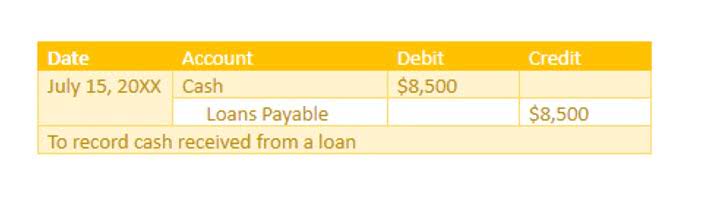
An example of revenue accrual would occur when you sell a product for $10,000 in one accounting period but the invoice has not been paid by the end of the period. You would book the entry by debiting accounts receivable recording transactions by $10,000 and crediting revenue by $10,000. This refers to revenue that are recorded in financial records once the transactions is carried out, regardless of whether cash has been received. For instance, in a case where a service is offered to a client, but actual revenue is yet to be received, the revenue is transferred to a revenue accrued account. After the payment is received, the revenue previously accrued is deducted based on the revenue received. Deferred revenue refers to payments received in advance for goods or services that have not yet been delivered.


Creating journal entries for accrued expenses
- One challenge is that it requires extensive record-keeping and meticulous attention to detail.
- Users will be able to process department accruals and deferrals using the Year-End Department Accrual starting on July 10.
- The Wages Expense amount will be zeroed out so that the next accounting year begins with a $0 balance.
- For example, you must pay for the electricity you used in December but will not receive your bill until January.
- This means revenue is recognized when it’s earned, and expenses are recorded when they’re incurred, even if cash hasn’t exchanged hands yet.
- By understanding these two concepts, businesses can gain greater insight into their financial health and make informed decisions based on timely information.
Without accrual accounting, this revenue wouldn’t be recognized in the correct period, leading to distorted financial statements. Accruals ensure that revenue is recorded when it’s earned, regardless of when cash is received. Deferral accounting, on the other hand, involves postponing the recognition of revenue or expenses until a later accounting period. This method is typically used when cash is received or paid in advance of when accrual vs deferral the revenue is earned or the expense is incurred. A deferral or advance payment occurs when you pay for a product or service in the current accounting period but record it after delivery.
- This occurs when revenue hasn’t been earned or expenses haven’t been incurred at the time of the cash transaction.
- In the service industry, examples of accruals include recognizing revenue when services are provided, even if payment hasn’t been received yet.
- Typically, the amount of the asset is changed monthly by the amount of spending.
- Accurate record-keeping is essential for accrual or deferral implementation as it allows for easy identification and allocation of revenues and expenses over time.
- The threshold of $10k applies to most expenses and income, but some limited exceptions are listed in the fiscal closing instructions.
- Accrual and deferral are two accounting concepts that deal with the recognition of revenues and expenses in financial statements.
Accrual Accounting Example
Adjusting entries are accounting journal entries that convert a company’s accounting records to the accrual basis of accounting. An adjusting journal entry is typically made just prior to issuing a company’s financial statements. Accrual is an accounting method where companies record revenue and Payroll Taxes expenses as they are earned or incurred, not when money changes hands. It will result in one business classifying the amount involved as a deferred expense, the other as deferred revenue. You entered more than one month for the frequency term for contracts for which you want to post accruals or deferrals. •Accrual accounting must be used for fixed-income securities and all other assets that accrue interest income.

- This deferral is based on the timing differences between when the expense was incurred and when it is actually paid.
- To navigate the financial tapestry of a business, it’s essential to grasp the concepts of accrual and deferral—cornerstones of accounting that dictate how transactions are recorded and recognized.
- A copy of the invoice is forwarded to the Accounting Department to create the journal entry to recognize the expense and the liability (accrued expense).
- In this article, we will cover the accrual vs deferral and its keys differences with example.
- Further, the company has a liability or obligation for the unpaid interest up to the end of the accounting period.
- This approach aligns with the deferral principle, ensuring that financial statements accurately reflect the company’s performance over time.
In the context of accounts receivable it is the amount of accounts receivable that is expected to be collected. This should be the debit balance in Accounts Receivable minus the credit balance in Allowance for Doubtful Accounts. When the allowance account is used, the company is anticipating that some accounts will be uncollectible in advance of knowing the specific account.
- You can also accrue other expenses such as utility, rent, salaries & wages, etc.
- For example, a company might prepay its rent for the year or its insurance premiums.
- The cash basis is very easy to use and generally, there is not much complexity involved in it as simply a record of the transaction only when the cash is received in the business.
- Accrual occurs before payment or a receipt and deferral occur after payment or receipt.
- The matching concept of accounting states that incomes and expenses should be recognized in the period they relate to rather than the period in which a compensation is received or paid for them.
the value of accrual and deferral
To assist you in understanding adjusting journal entries, double entry, and debits and credits, each example of an adjusting entry will be illustrated with a T-account. On the other hand, deferral basis works differently; it waits for the cash to move before recording. If a customer prepays for a year of services, the business doesn’t recognize all that revenue right away. A Deferral refers to revenue that was received before delivery of the product or service to the customer, as well as expenses paid in advance.