
What is the Difference Between Accrual and Deferral?

accrual vs deferral

We’ll guide you step-by-step through understanding each method, enabling better decision-making for your business’s future. External stakeholders such as investors, creditors, and regulators rely on accurate financial reporting to assess the company’s profitability, liquidity, solvency, and overall financial stability. Accurate financial statements enhance transparency and trust among these stakeholders, which can lead to increased investor confidence and improved access to capital. By understanding these concepts, you’ll be able to properly recognize revenue when it’s earned and expenses when they occur, giving you a clear picture of your company’s performance. If you see deferred expense in the assets side of the balance sheet it means that the company has already paid money in advance and expected to get a product or service from the seller. If you see deferred revenue in the liabilities side of the balance sheet it means that the company received money in advance and should deliver a product or a service for it.
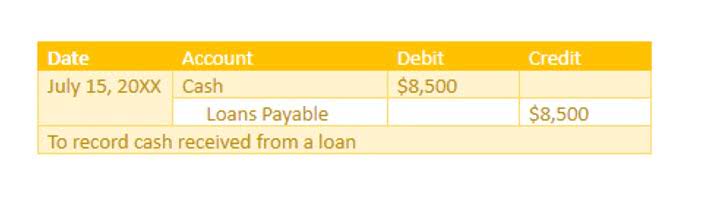
accrual vs deferral

Financial Accounting 101: Accruals and Deferrals – Accrual Accounting – Made Easy

accrual vs deferral

Now when you incur rent expenses (which usually occurs every end of the month), you credit prepaid rent instead of cash as you already paid for it. Under the cash accounting method, you record deferrals as if they’re actual accounting transactions. Accruals allow you and your business to record transactions even if there is no cash involved, so long as they are earned (revenue) or incurred (expense). Remember that there isn’t a one-size-fits-all answer; what works for one business may not work for another. Choosing between accrual and deferral accounting requires careful consideration based on your unique circumstances and goals. Accrued income is earned income where a business has provided goods or services but the payment hasn’t been received.

Example of Accruals and Accounting Treatment
accrual vs deferral

An example of revenue accrual would occur when you sell a product for $10,000 in one accounting period but the invoice has not been paid by the end of the period. You would book the entry by debiting accounts receivable recording transactions by $10,000 and crediting revenue by $10,000. This refers to revenue that are recorded in financial records once the transactions is carried out, regardless of whether cash has been received. For instance, in a case where a service is offered to a client, but actual revenue is yet to be received, the revenue is transferred to a revenue accrued account. After the payment is received, the revenue previously accrued is deducted based on the revenue received. Deferred revenue refers to payments received in advance for goods or services that have not yet been delivered.

accrual vs deferral

Creating journal entries for accrued expenses

  • One challenge is that it requires extensive record-keeping and meticulous attention to detail.
  • Users will be able to process department accruals and deferrals using the Year-End Department Accrual starting on July 10.
  • The Wages Expense amount will be zeroed out so that the next accounting year begins with a $0 balance.
  • For example, you must pay for the electricity you used in December but will not receive your bill until January.
  • This means revenue is recognized when it’s earned, and expenses are recorded when they’re incurred, even if cash hasn’t exchanged hands yet.
  • By understanding these two concepts, businesses can gain greater insight into their financial health and make informed decisions based on timely information.

Without accrual accounting, this revenue wouldn’t be recognized in the correct period, leading to distorted financial statements. Accruals ensure that revenue is recorded when it’s earned, regardless of when cash is received. Deferral accounting, on the other hand, involves postponing the recognition of revenue or expenses until a later accounting period. This method is typically used when cash is received or paid in advance of when accrual vs deferral the revenue is earned or the expense is incurred. A deferral or advance payment occurs when you pay for a product or service in the current accounting period but record it after delivery.

  • This occurs when revenue hasn’t been earned or expenses haven’t been incurred at the time of the cash transaction.
  • In the service industry, examples of accruals include recognizing revenue when services are provided, even if payment hasn’t been received yet.
  • Typically, the amount of the asset is changed monthly by the amount of spending.
  • Accurate record-keeping is essential for accrual or deferral implementation as it allows for easy identification and allocation of revenues and expenses over time.
  • The threshold of $10k applies to most expenses and income, but some limited exceptions are listed in the fiscal closing instructions.
  • Accrual and deferral are two accounting concepts that deal with the recognition of revenues and expenses in financial statements.

Accrual Accounting Example

Adjusting entries are accounting journal entries that convert a company’s accounting records to the accrual basis of accounting. An adjusting journal entry is typically made just prior to issuing a company’s financial statements. Accrual is an accounting method where companies record revenue and Payroll Taxes expenses as they are earned or incurred, not when money changes hands. It will result in one business classifying the amount involved as a deferred expense, the other as deferred revenue. You entered more than one month for the frequency term for contracts for which you want to post accruals or deferrals. •Accrual accounting must be used for fixed-income securities and all other assets that accrue interest income.

  • This deferral is based on the timing differences between when the expense was incurred and when it is actually paid.
  • To navigate the financial tapestry of a business, it’s essential to grasp the concepts of accrual and deferral—cornerstones of accounting that dictate how transactions are recorded and recognized.
  • A copy of the invoice is forwarded to the Accounting Department to create the journal entry to recognize the expense and the liability (accrued expense).
  • In this article, we will cover the accrual vs deferral and its keys differences with example.
  • Further, the company has a liability or obligation for the unpaid interest up to the end of the accounting period.
  • This approach aligns with the deferral principle, ensuring that financial statements accurately reflect the company’s performance over time.

In the context of accounts receivable it is the amount of accounts receivable that is expected to be collected. This should be the debit balance in Accounts Receivable minus the credit balance in Allowance for Doubtful Accounts. When the allowance account is used, the company is anticipating that some accounts will be uncollectible in advance of knowing the specific account.

  • You can also accrue other expenses such as utility, rent, salaries & wages, etc.
  • For example, a company might prepay its rent for the year or its insurance premiums.
  • The cash basis is very easy to use and generally, there is not much complexity involved in it as simply a record of the transaction only when the cash is received in the business.
  • Accrual occurs before payment or a receipt and deferral occur after payment or receipt.
  • The matching concept of accounting states that incomes and expenses should be recognized in the period they relate to rather than the period in which a compensation is received or paid for them.

the value of accrual and deferral

To assist you in understanding adjusting journal entries, double entry, and debits and credits, each example of an adjusting entry will be illustrated with a T-account. On the other hand, deferral basis works differently; it waits for the cash to move before recording. If a customer prepays for a year of services, the business doesn’t recognize all that revenue right away. A Deferral refers to revenue that was received before delivery of the product or service to the customer, as well as expenses paid in advance.

What is Outsourcing and How Does it Work?

It is important for companies to know when the contractual agreement inevitably times out and ensure that the involved parties fulfill their obligations and stick around until the contract is up. Some experts recommend placing extra emphasis on the exit clause of a service contract. Outsourcing is about managing relationships, more than service-level agreements, and is a partnership, not a purchasing project.

The global software R&D services market, as contrasted to information technology outsourcing (ITO) and business process outsourcing (BPO), is rather young and currently is at a relatively early stage of development. For most companies, having the capacity to change rapidly to meet client needs and market patterns and the ability to scale up and scale down services based on business demands are valid reasons to find an external service provider. Companies in third-world countries can provide competitive rates for BPO services or manufacturing services because the cost of the business in their part of the world is usually lower. Simply put, Business Process Outsourcing involves outsourcing a particular business process, such as HR, IT, accounting/payroll, customer service, and other tasks, to an external provider. Companies also could realize that they lose control over aspects of the outsourced tasks or services.

  • For example, if the company is American and chooses to offshore that work, they might hire a development firm in India or England.
  • India’s software boom kicked off in the 1990s, with outsourcing companies striking gold.
  • Another reason for a decrease in outsourcing is that many jobs that were subcontracted abroad have been replaced by technological advances.
  • If a company is small, but planning to launch a new product and expects plenty of inquiries, the business may consider outsourcing the chat or voice calls to a third-party customer service representative.
  • One estimate of the worldwide BPO market from the BPO Services Global Industry Almanac 2017, puts the size of the industry in 2016 at about US$140 billion.

While much of this work is the “bread and butter” of specialized departments within advertising agencies, sometimes specialist are used, such as when The Guardian outsourced most of its marketing design in May 2010. The term outsource marketing has been used in Britain to mean the outsourcing of the marketing function. Today, there are web based print to mail solutions for small to mid-size companies which allow the user to send one to thousands of documents into the mail stream, directly from a desktop or web interface. The Asian IT service market is still in its infancy, but in 2008 industry think tank Nasscom-McKinsey predicted a $17 billion IT service industry in India alone. Countries which have been the focus of outsourcing include India and the Philippines for American and European companies, and China and Vietnam for Japanese companies. Democratic U.S. presidential candidate John Kerry called U.S. firms that outsource jobs abroad or that incorporate overseas in tax havens to avoid paying their “fair share” of U.S. taxes “Benedict Arnold corporations”.

In 2015, official statistics put the size of the total outsourcing industry in China, including not only the BPO industry but also IT outsourcing services, at $130.9 billion. BCM consists of a set of steps, to successfully identify, manage and control the business processes that are, or can be outsourced. Supply chain management with effective use of supply chain partners and business process outsourcing can increase the speed of several business processes. A 2004 study in the U.S., the UK, and many other industrialized countries more jobs are insourced than outsourced. Sometimes there are problems with the outsourcing agreements, because of the pressure to bring jobs back to their home country, or simply because it has stopped being efficient to outsource particular tasks. According to a 2005 Deloitte Consulting survey, a quarter of the companies which had outsourced tasks reversed their strategy.

Step-in rights allow the client or a nominated third party the right to step-in and intervene, in particular to directly operate the outsourced services or to appoint a new operator. Co-sourcing services can supplement internal audit staff with specialized skills such as information risk management or integrity services, or help during peak periods, or similarly for other areas such as software development or human resources. German companies have outsourced to Eastern European countries with German-language affiliation, such as Poland and Romania. Unlike outsourced manufacturing, outsourced white collar workers have flextime and can choose their working hours, and for which companies to work. Guidance states that specific criteria must govern the identification of such services, and that “everything else” could potentially be outsourced.

Outsourcing visa

Studies suggest that the effect of U.S. outsourcing on Mexico intangible asset definition is that for every 10% increase in U.S. wages, north Mexico cities along the border experienced wage rises of 2.5%, about 0.69% higher than in inner cities. A main feature of outsourcing influencing policy-making is the unpredictability it generates, including its defense/military ramifications, regarding the future of any particular sector or skill-group. Obama met with representatives of Otis Elevator, Apple, DuPont, Master Lock, and others which had recently brought jobs back or made significant investments in the U.S. Western governments may attempt to compensate workers affected by outsourcing through various forms of legislation. More than one company uses a “100% U.S. Based” phrase, whether within or outside their envelopes.

Key Aspects of Outsourcing

Gartner Group adds in Russia, but does not make clear whether this is pure R&D or run-of-the-mill IT outsourcing. As of 2018, the top three were deemed by one “research-based policy analysis and commentary from leading economists” as China, India and Israel.” Another approach is to differentiate between tactical and strategic outsourcing models. For Australian IT companies, Indonesia is one of the major choice of offshoring destination. Clients benefit from remote work, reduced office space, management salary, and employee benefits as these individuals are independent contractors. On average, software engineers in India are getting paid between 250,000 and 1,500,000 rupees (US$4,000 to US$23,000) per year as opposed to $40,000–$100,000 in countries such as the U.S. and Canada.

Continue Reading About What is outsourcing?

There is more complexity than before, especially when the outside company may be an integrator. In turn, companies such as Pfizer and Novartis, have lost rights to sell many of their cancer medications in India because of lack of IP protection. While Pfizer moved some of its R&D from the UK to India, a Forbes article suggested that it is increasingly more dangerous to offshore IP-sensitive projects to India, because of India’s continued ignorance of patent regulations. Just as the U.S. has a Made in USA program, other countries support products being made domestically.

Communications and customer service

Regulators can also mitigate concerns by ensuring that outsourcing is adequately considered in their assessments of individual firms whilst taking account of concentration risks in thirdparty providers when considering systemic risk issues. The Joint Forum principles are designed to apply whether or not the service provider is a regulated entity. Increasingly more complex arrangements are developing whereby related entities perform some activities, while unrelated service providers perform others. An institution might split such functions as product manufacturing, marketing, back-office and distribution within the regulated entity. To help answer these questions and to guide regulated businesses, the Joint Forum established a working group to develop high-level principles about outsourcing. In these situations, how can financial service businesses remain confident that they remain in charge of their own business and in control of their business risks?

Growth of white-collar outsourcing

This information is intended to prepare business logistics managers to make an informed decision regarding the potential benefits of logistics outsourcing and business process outsourcing services. Its potential impact can be seen across many business activities, including information technology (e.g., applications development, programming, and coding), specific operations (e.g., some aspects of finance and accounting, back-office activities and processing, and administration), and contract functions (e.g., call centres). Although outsourcing has been viewed as a way to lower costs and gain efficiencies, it is increasingly becoming a strategic tool for companies. Some an overview of the american opportunity tax credit might find that the resources devoted to managing those relationships rivals the resources devoted to the outsourced tasks, possibly negating many, if not all, of the benefits sought by outsourcing. Companies might find that they can streamline production and/or shorten production times because the third-party providers can more quickly execute the outsourced tasks. In addition to delivering lower costs and increased efficiencies, companies that outsource could see other benefits.

Outsourcing includes both foreign and domestic contracting, and therefore should not be confused with offshoring which is relocating a business process to another country but does not imply or preclude another company. The practice of handing over control of public services to private enterprises (privatization), even if conducted on a limited, short-term basis, may also be described as outsourcing. The U.S. employs an estimated 10,000 commercial sailors, a number that has fallen sharply over recent decades as America what is purchase price variance outsourced much of its shipping demands to China and other countries. By relying on outsourcing, business processes can become more streamlined and organized. Companies may outsource their IT needs to a third-party provider, such as an IT consultant or managed service provider (MSP) that they may not have internally.

Innovation outsourcing

This can help a company to become more flexible by transforming fixed into variable costs. Information technology-enabled service (ITES-BPO), knowledge process outsourcing (KPO) and legal process outsourcing (LPO), a.k.a. legal outsourcing, are some of the sub-segments of BPO. The term “outsourcing” became very common in the print and mail business during the 1990s, and later expanded to be very broad and inclusive of most any process by 2000. The Print Services & Distribution Association was formed in 1946, and its members provide services that today might involve the word outsource. In the Philippines, firms such as Select VoiceCom are expanding their call-centre and business process outsourcing operations by integrating artificial-intelligence tools and serving global clients, reflecting the country’s evolving outsourcing model.

  • Co-sourcing services can supplement internal audit staff with specialized skills such as information risk management or integrity services, or help during peak periods, or similarly for other areas such as software development or human resources.
  • Well-defined outsourcing contracts are crucial in managing expectations and ensuring compliance between clients and vendors.
  • A number of outsourcings and offshorings that were deemed failures led to reversals signaled by use of terms such as insourcing and reshoring.
  • Companies sometimes opt to outsource as a way to shift meeting regulatory requirements or obligations to the third-party provider.
  • Today, there are web based print to mail solutions for small to mid-size companies which allow the user to send one to thousands of documents into the mail stream, directly from a desktop or web interface.

Now that you know the pros and cons of outsourcing, some real-world examples of outsourcing, and the possibilities outsourcing can offer your business functions, you can determine if outsourcing is a good choice for the company. By understanding and leveraging these key aspects, models, relationships, and services, businesses can make informed decisions about outsourcing and maximize the benefits it offers. This is the reason many companies from the United States, Canada, Australia, Europe, and other countries prefer offshore outsourcing for a variety of industries, not just for BPO companies. The BPO industry is a perfect example of how cost savings can be achieved by investing in offshore outsourcing. Different types of outsourcing providers can benefit companies in specific ways, from simple data entry to complex projects like product manufacturing. Some technology companies contract other Asia-based companies to build parts of their smartphones; this is an example of outsourcing manufacturing.

Drucker began explaining the concept of “outsourcing” as early as 1989 in his Wall Street Journal article entitled “Sell the Mailroom”. Cost savings from economies of scale and specialization can also motivate outsourcing, even if not offshoring. Definitions and idiom definitions from Dictionary.com Unabridged, based on the Random House Unabridged Dictionary, © Random House, Inc. 2023 Well-defined outsourcing contracts are crucial in managing expectations and ensuring compliance between clients and vendors. Below are some of the most frequently asked questions about outsourcing. There are a few general best practices to follow for successful outsourcing.

While the number of technically skilled labor grows in India, Indian offshore companies are increasingly tapping into the skilled labor already available in Eastern Europe to better address the needs of the Western European R&D market.citation needed To defend against tax-motivated cost-shifting, the U.S. government passed regulations in 2006 to make outsourcing research harder. Indeed, this problem has presented an attractive opportunity to some suppliers to move up market and offer higher value services. Further complications arise from cultural differences, which apply even if the development is carried out by an in-house offshore team.

Tips for Successful Outsourcing

Although offshoring initially focused on manufacturing, white-collar offshoring/outsourcing has grown rapidly since the early 21st century. Areas for advancing within the value chain included research and development, equity analysis, tax-return processing, radiological analysis, and medical transcription. Forbes considered the 2016 U.S. presidential election “the most disruptive change agent for the outsourcing industry”, especially the renewed “invest in America” goal highlighted in campaigning, but the magazine tepidly reversed direction in 2019 as to the outcome for employment. In 2013, the International Association of Outsourcing Professionals gave recognition to Electronic Data Systems Corporation’s Morton H. Meyerson who, in 1967, proposed the business model that eventually became known as outsourcing. Two organizations may enter into a contractual agreement involving an exchange of services, expertise, and payments.